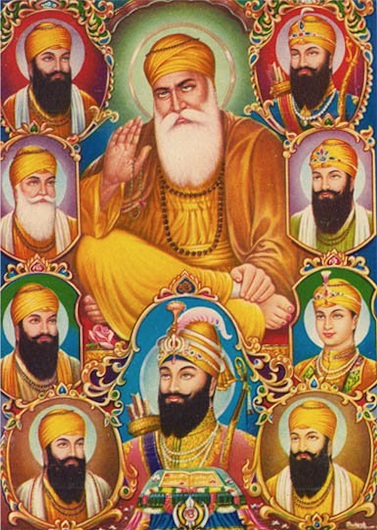
Guru Nanak appeared on the Indian firmament at a time during 15th century when the world was plunged into dark ignorance and India was suffering under hell of persecutions and harassment. The people were oppressed and suppressed. The society was divided into different groups on the basis of caste, color, creed and socio-economic position. Guru Nanak fought against all the evils.
Guru Nanak Dev founded the institutions of Dharam Sala (Nomenclature for Gurdwara), Sangat (Congregation of holy men) and Pangat (all people sitting together as equal and eating from community Langar (kitchen) in line without discrimination of caste, colour, creed or religion). The succeeding Gurus consolidated the institutions and preached the Sikh gospel. The spirit behind establishment of Sikh institutions was to bring liberty, equality, fraternity, dignity and honor to the common man. It was to create self confidence and faith in One God and His creation. These institutions inculcated a sense of equality, brotherhood and human dignity among the high and low.
These institutions proved to be best tool to uplift the down trodden people to so that they could get opportunity to lead a virtuous life, attain spiritualism and unite with Almighty God. The commonly known Sikh institutions are:
- Gurdwara
- Sangat (General Assembly)
- Pangat (Holy Congregation)
- Guru Ka Langar (Community Kitchen)
- Amrit Sanchar
- Anand Karaj (Marriage)
- Sarae (Rest house-inn)
- Educational or medical institutions (Pingalwaras, hospitals)
- Kirtan, Seva, and other institutions
- Khalsa Panth
- Akal Takht (Throne of the timeless God) and other four Takhts
- Martyrdom
Sikhism stands infallible for the concept of human liberty, equality and fraternity. This concept gave birth to a new thought against privileged hierarchy of elite. From this thought erupted the immense consequences of civil liberties against human oppression in the world. It gave birth to new changes that the sovereignty rested with the people and that the government is merely agent of the people and for the people.