
Are we preserving, adding to and passing on our virsa ?
Virsa is a Punjabi word which means heritage. Perhaps the meaning of this word is closer to what Alex Haley had in mind when he searched for his Roots. Virsa is an individual’s inheritance in its material and cultural totality and is therefore an integral part of each person’s background and personality; it is one’s ancestry which cannot be disavowed. Virsa is the foundation on which a civilised society evolves. Realisation of Virsa is realisation of one’s total personality. It is realisation of one’s cultural, spiritual and worldly assets, both, as an individual and as member of a family and a community. Each generation adds to the virsa of families and communities for posterity.
Virsa is the main ingredient underlying the orderly evolution of human communities. It gives one a sense of belonging, orientation, continuity and stability. It gives purpose and direction to life. Virsa is the material, spiritual and cultural treasure one inherits on birth and it remains a part of conscious (or subconscious) part of the personality of every individual till death. If properly understood it should add to an individual’s potential for achievement. The study, understanding and acceptance of one’s virsa is an essential process of self orientation in the big wide world. Recognition of own virsa allows one to play a fuller and more responsible role in the multi-cultural societies we live in.
Those of us who migrated to western countries in late fifties and early sixties clearly recall the lot of the black man in these societies. Supported by human rights movements and liberal politicians like John Kennedy, the struggle for black recognition was on. Martin Luther King, the black civil-rights campaigner led the big march on Washington in 1963. John Kennedy paid the price for his liberal policies in the same year. Martin Luther King was shot dead in 1968. But the black man still had no virsa he could identify himself with. That is, not until Alex Haley, enthused by his grandmother’s stories, painstakingly traced his origins to a village in Africa. By doing that he had more than discovered the origin of his own family. He had in fact discovered a rich cultural heritage for 25 million Americans of African descent that slavery had taken away from them.
Virsa is like the baton which is passed on in a relay race from one athlete to the next; to drop it and to run on without picking it up is to run aimlessly. It is to break the chain of virsa. You may be the fastest athlete in the world, but not to pick up that baton of virsa which is being passed on to you is to defeat the whole objective of the sport. On the other hand, a slower athlete who is careful to grab the baton from the previous runner in his team, will surely ensure a place for his team at the finish.
One’s life span needs to be seen in the same way: to take part and to compete and to ensure that the baton of virsa has been picked up and by the end of one’s life-span passed on safely to the next generation. In addition to what has been inherited from own family, virsa includes the history, culture and language of own community and its place and the place of the individual in the world community.
It is sad to see an increasing number of young and fast Sikh “athletes” running without the batons of virsa in their hands these days ! They are doing well materially but where have they come from and whence are they going, they know not. Does it matter so far as they are doing well? Study of those individuals and communities who lost touch with their virsa over the centuries shows that it does matter; it matters very much indeed. History shows that communities not caring for own history and heritage have perished like flowing rivers which run into desert sands and disappear. The thriving communities are those which continue to understand their rich virsa and keep on building on it. These are the clearly identifiable communities playing their full role in the multi-cultural world community of united nations today.
The Sikhs have a rich virsa and the Sikh history is one of the most exciting and eventful in the world. I recall sitting next to a rabbi on a return flight from Cologne a few years ago. He told me that he had studied Sikh religion and history and was most pleasantly surprised to find many similarities between the Jews and the Sikhs. Both have shown a remarkable determination and triumphed over oppression and injustice over the centuries. He was referring to the great virsa of the two nations which ensured their survival against near impossible odds.
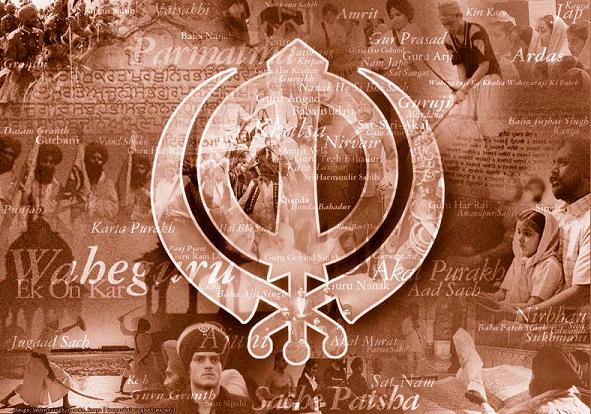
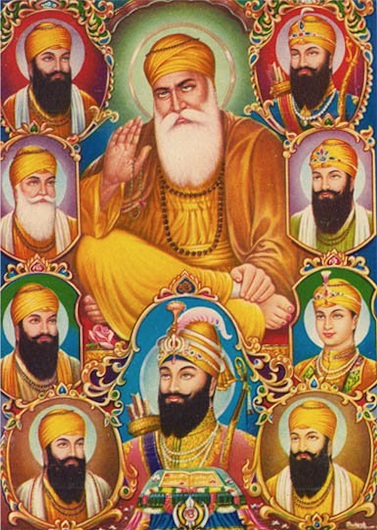
The Sikh virsa is the future virsa of mankind in the areas of human rights, the principle of “fear none and frighten none”, mutual tolerance and co-existence in the rich cultural variety of mankind, sacrifice for others (Guru Tegh Bahadhur, the Ninth Master gave his life to defend another’s religion and culture), and most important of all “Fatherhood of the Creator and Brotherhood of the created”. The Sikh identity is an essential part of Sikh virsa. It says to mankind that people do not become aliens by being different in appearance; that there are no aliens on the earth or out there; just other varieties of God’s creation.
We were labelled as “aliens” by the western press and treated as such by the white majority when we first arrived in these countries in any significant numbers in the late fifties and early sixties. People like Enoch Powell made dire predictions of “Thames flowing with much blood” if we were allowed to stay on and build communities. There was much talk of “assimilation” and westernising us and so on. In fact it turned out that the virsas of the different communities had much to offer to the enrichment of the lives of multi-cultural communities as they strive towards highest common denominators in terms of human values. Identification with own virsa ensures a responsible attitude through identification with family and community values and thus a disciplined approach to life.
Educated young Sikhs need to give more thought to their great virsa which has brought the Sikh nation this far. History shows that the alternative is disintegration of the community and the loneliness, aimlessness and socio-political impotence of individuals without group identity, culture, heritage, language or representation. The negroes, the Red Indians, the Australian aborigines and many others have been there!
Are we preserving and passing on our rich virsa ? That is the question and that is our aim, which should always be before us.
© Copyright Gurmukh Singh (U.K.)
E-mail: sewauk2005@yahoo.co.uk
Please acknowledge quotations from this article
Articles may be published subject to prior approval by the author